
There’s something incredibly satisfying about that creamy, spiced caramel flavor meeting smooth, melt-in-your-mouth fudge. This Biscoff Fudge Recipe brings those classic cookie flavors straight into a rich, decadent treat that’s surprisingly simple to make—trust me, it’s worth every buttery bite.

Jump to:
Why You'll Love This Recipe
I’ve made my fair share of fudge over the years, but this Biscoff version always lights up the room. Its unique flavor profile, combined with the creamy texture, makes it a dessert that gets devoured fast. It’s straightforward enough for even a weeknight treat but special enough to wow guests.
- Rich but Easy: Uses just a handful of ingredients, yet delivers that indulgent, melt-in-your-mouth experience.
- Unique Flavor: Combines the sweet, spiced goodness of Biscoff spread and cookies for a nostalgic twist.
- Customizable: You can tweak the cookie chunks or drizzle more spread on top for extra flair.
- Great for Gifting: Sets beautifully and transports well, making it perfect to share during holidays or parties.

Ingredients & Why They Work
This fudge comes together with surprisingly few ingredients—but each plays a crucial role in the final texture and flavor. Here’s a quick look at why they’re the perfect match:

- White baking chocolate: Provides a smooth, creamy base that melts beautifully and balances the caramel notes from the Biscoff.
- Sweetened condensed milk: Adds sweetness and richness, giving the fudge its soft but firm consistency.
- Biscoff spread: The star of the show, bringing that signature cinnamon-baked cookie flavor into every bite.
- Salt: Just a pinch lifts the sweetness and enhances all the flavors without tasting salty.
- Biscoff cookies: Chop these up to sprinkle inside and on top for satisfying crunch and an extra burst of spice.
Make It Your Way
Don’t be shy about making this recipe your own! I love swirling in extra Biscoff spread on top or mixing in some chopped nuts for crunch. Whatever your style, this Biscoff fudge is forgiving and easy to customize.
- Variation: I once added a touch of espresso powder for a mocha twist—it gave the fudge a subtle coffee depth that worked surprisingly well!
- Dietary tweak: If you want to cut back on sugar a bit, try using sugar-free white chocolate, just know it’ll change the texture a bit.
- Seasonal change: During holidays, I swap out half the cookie chunks with crushed ginger snaps for a festive vibe.
Step-by-Step: How I Make Biscoff Fudge Recipe
Step 1: Prep Your Pan and Ingredients
Start by lining an 8-inch square baking pan with parchment paper—that way your fudge won’t stick and you can lift it out easily to cut. Then, break the white chocolate into smaller chunks so it melts evenly. Roughly chop your Biscoff cookies, splitting the amount in half—some go inside, some on top.
Step 2: Melt the Magic Together
Pop your white chocolate, condensed milk, Biscoff spread, and salt into a large microwave-safe bowl. Microwave in 30-second bursts, stirring after each, until everything’s completely melted and silky smooth. I find stirring regularly is key to avoid overheating or scorching the chocolate. Alternatively, use a double boiler method if you prefer gentle melting—it works beautifully too.
Step 3: Mix in Cookies and Set
Stir half the chopped Biscoff cookies into your melted mixture. Pour it into your prepared pan and smooth the top with a spatula so it’s nice and even. Sprinkle the remaining chopped cookies on top, then press down gently so they stick. This adds a lovely crunch and great texture contrast.
Step 4: Chill and Slice
Pop your fudge in the fridge and let it set for at least 2 hours. Patience here pays off—the longer it chills, the better it cuts. When ready, lift it out with the parchment and slice into small squares. If you’re feeling fancy, drizzle a little extra melted Biscoff spread on top before slicing—that extra swirl looks stunning and tastes fantastic.
Top Tip
From my experience making this Biscoff fudge multiple times, a few small tweaks really bring it from good to unforgettable. These tips helped me avoid the classic fudge fails and make it as tasty and smooth as possible.
- Consistent stirring: Stir after every 30-second microwave blast to prevent burning and ensure smooth melting.
- Cookie chopping: Coarsely chop your Biscoff cookies so you get good texture without crunching your teeth.
- Pressing toppings: Gently press cookie pieces into the fudge before chilling to help them adhere well and prevent crumbs from falling off.
- Use parchment paper: Always line your pan to make removing the fudge quick and mess-free.
How to Serve Biscoff Fudge Recipe

Garnishes
I love sprinkling a few extra crushed Biscoff cookies or a drizzle of warm Biscoff spread right before serving—it amps up the wow factor and adds a little extra texture. A pinch of sea salt on top also creates a delightful sweet-salty combo that makes each bite pop.
Side Dishes
This fudge pairs beautifully with a simple dollop of whipped cream or a scoop of vanilla ice cream if you’re serving it as dessert. For a casual coffee gathering, I often serve it alongside a cup of hot espresso or chai tea for cozy vibes.
Creative Ways to Present
For special occasions, I’ve arranged the fudge squares on a wooden serving board with a scattering of whole Biscoff cookies and some edible flowers. Wrapping small squares individually in parchment and ribbon makes for charming homemade gifts that friends adore.
Make Ahead and Storage
Storing Leftovers
I keep my leftover Biscoff fudge fresh by storing it in an airtight container in the fridge. It stays delicious for up to a week, so you can indulge without rushing. Just bring pieces to room temperature for a few minutes before enjoying to soften the texture slightly.
Freezing
Freezing is a great way to extend this fudge’s shelf life. I slice it first, then freeze the pieces on a baking tray so they don’t clump together. Once frozen, pop the slices into a sealed bag or container. It keeps well for up to 3 months this way—perfect for prepping ahead or gifting!
Reheating
Unlike brownies or cakes, fudge doesn’t really need reheating. If you want it a bit softer, just let it sit at room temperature for 10–15 minutes. Resist microwaving or warming too much—too much heat will make it grainy.
Frequently Asked Questions:
You could, but white baking chocolate blends best with the sweetness and flavor of Biscoff spread. Regular milk or dark chocolate will change the flavor profile and texture of your fudge significantly.
No worries! Speculoos spread is a fantastic substitute and offers a very similar flavor. If you can find neither, you might try making the fudge with a smooth peanut butter or cookie butter, but the flavor won’t be quite the same.
You can absolutely omit the salt if you prefer. I find just a tiny pinch really enhances the sweetness and deepens the flavors, but it’s still delicious without.
Yes! A 9-inch square pan will work just fine, though the fudge will be a bit thinner. You'll want to keep an eye on the chilling time, but it should set just as nicely.
Final Thoughts
This Biscoff fudge recipe has become one of my favorite quick indulgences to whip up when I want something sweet but fuss-free. The way the cozy spice from the Biscoff interacts with the creamy white chocolate fudge is just magic. I truly hope you enjoy making and sharing it as much as I do—it’s the kind of treat that disappears fast, but leaves everyone asking for more.
Print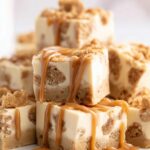
Biscoff Fudge Recipe
- Prep Time: 5 minutes
- Cook Time: 5 minutes
- Total Time: 2 hours 10 minutes
- Yield: 25 pieces
- Category: Dessert
- Method: No-Cook
- Cuisine: American
Description
This rich and creamy Biscoff Fudge combines smooth white baking chocolate, sweetened condensed milk, and the distinctive spiced flavor of Biscoff spread and cookies. It is an easy no-bake dessert that sets in the fridge and is perfect for serving in bite-sized pieces for any occasion.
Ingredients
Fudge Base
- 14 ounces white baking chocolate, broken into smaller pieces
- 14 ounces sweetened condensed milk
- ⅓ cup Biscoff spread plus more for topping if desired
- ⅛ teaspoon salt
Mix-ins and Topping
- 8 Biscoff cookies, roughly chopped, divided
Instructions
- Prepare the pan. Line an 8-inch square baking pan with parchment paper and set aside.
- Melt the ingredients. In a large microwave-safe bowl, combine the white baking chocolate, sweetened condensed milk, Biscoff spread, and salt. Microwave in 30-second intervals, stirring well between each, until fully melted and the mixture is smooth.
- Mix in cookies. Stir half of the chopped Biscoff cookies into the melted fudge mixture until evenly distributed.
- Assemble the fudge. Spoon the fudge mixture into the prepared pan, smoothing the surface with a rubber spatula. Sprinkle the remaining chopped Biscoff cookies over the top and press down gently so they stick into the fudge.
- Set the fudge. Place the pan in the refrigerator for at least 2 hours to allow the fudge to fully set.
- Optional topping. Before slicing and serving, drizzle additional melted Biscoff spread over the top if desired.
- Slice and serve. Once set, cut the fudge into 25 small squares and enjoy.
Notes
- Store the fudge in an airtight container in the refrigerator to keep fresh for up to 1 week.
- To freeze fudge, slice it first, flash-freeze the pieces on a baking sheet to prevent sticking, then transfer to an airtight container or freezer bag. Freeze for up to 3 months.
- For a double boiler melting method, use a heatproof bowl over a saucepan of simmering water to gently melt the chocolate, condensed milk, Biscoff spread, and salt with constant stirring.
- Using a 9-inch square baking pan is possible but will result in thinner fudge pieces.
- If Biscoff spread is unavailable, Speculoos spread is a suitable substitute.
- The salt enhances the sweetness balance, but can be omitted if preferred; fudge will still be delicious.
Nutrition
- Serving Size: 1 piece
- Calories: 150 kcal
- Sugar: 18 g
- Sodium: 30 mg
- Fat: 7 g
- Saturated Fat: 4.5 g
- Unsaturated Fat: 2 g
- Trans Fat: 0 g
- Carbohydrates: 20 g
- Fiber: 0.5 g
- Protein: 1 g
- Cholesterol: 10 mg






Leave a Reply