
There’s just something so comforting about a hot plate of tender beef tossed with perfectly sauced noodles and crispy veggies. This Beef Lo Mein Recipe hits that spot every time—it’s easy to make, full of flavor, and just the kind of dinner you’ll want on repeat.

Jump to:
Why You'll Love This Recipe
I’ve been making this Beef Lo Mein Recipe for years, and no matter how many times I whip it up, it still feels like a little celebration. The balance of savory sauce with tender beef and crisp veggies makes it a crowd-pleaser every time.
- Easy to make at home: You don’t need a wok or fancy ingredients—just a skillet and some simple pantry staples.
- Perfect balance of textures: Tender marinated beef, chewy noodles, and crunchy vegetables keep every bite interesting.
- Customizable to your liking: Swap veggies or proteins easily to suit your mood or what you have on hand.
- Great for leftovers: It reheats beautifully, making it a terrific choice for meal prep or busy weeknights.
Ingredients & Why They Work
This Beef Lo Mein Recipe combines a few simple ingredients that pack a punch when combined. The key is balancing the savory and sweet, while using fresh veggies to add color and crunch. Let me walk you through what makes each one shine.

- Beef (top sirloin or flank): Tender cuts like sirloin or flank steak give you great flavor and texture without breaking the bank.
- Lo Mein noodles: These noodles are designed to soak up sauces perfectly—if you can’t find them, thin spaghetti works great too.
- Soy sauce: The salty backbone of the sauce that enhances the umami in the beef and veggies.
- Beef and chicken broth: Using both creates an unexpectedly rich flavor (trust me, it’s worth it).
- Brown sugar or honey: Adds just the right touch of sweetness to balance the salty and savory notes.
- Garlic and ground ginger: Essential aromatics that bring warmth and depth to the sauce.
- Vegetables (broccoli, onion, red bell pepper, carrots): Fresh and vibrant, they add crunch and freshness that make this dish feel wholesome.
- Toasted sesame oil and hot sauce: Just a tiny bit brings a savory nuttiness and a subtle kick.
Make It Your Way
One of the things I love most about this Beef Lo Mein Recipe is how easy it is to tweak based on what you like or have on hand. I usually switch up the veggies depending on the season or try swapping beef for chicken or shrimp for a change in flavor.
- Vegetable swaps: Mushrooms, snap peas, or even baby corn are great additions I’ve tried, and they work beautifully.
- Protein variations: I sometimes use flank steak if I want a leaner cut or chicken thighs when I’m in the mood for something a bit more tender.
- Spice it up: Add a bit more hot sauce or some chili flakes if you like a little heat—it totally wakes up the flavors.
- Gluten-free tweak: Use gluten-free soy sauce and rice noodles to make it fit your dietary needs without losing that classic lo mein taste.
Step-by-Step: How I Make Beef Lo Mein Recipe

Step 1: Prepare the Sauce and Marinate the Beef
Start by mixing up the sauce—combine beef broth, chicken broth, soy sauce, brown sugar, garlic, cornstarch, hot sauce, sesame oil, ginger, and a pinch of red pepper flakes if you want a little extra heat. I pour about a quarter cup of this aside for marinating the beef and use the rest later for the stir fry. Toss your thinly sliced beef strips in that reserved sauce and let it soak up the flavors while you prep veggies and noodles—this step really tenderizes the meat and builds flavor.
Step 2: Sear the Beef and Deglaze the Pan
Heat peanut oil in a large skillet over medium-high heat and lay in the beef strips, giving them room to sear undisturbed for 2 to 3 minutes. This creates that delicious browned crust, so don’t rush or stir too soon. After turning and cooking the other sides for a couple more minutes, remove the beef and set it aside. Then pour in the white wine to deglaze the pan, scraping up all those flavorful bits stuck to the bottom. Let the wine reduce by half—this little step adds a huge depth of flavor to your sauce.
Step 3: Cook the Noodles and Sauté the Vegetables
While your pan is bubbling away, boil those lo mein noodles until just shy of al dente—about a minute less than the package suggests. It’s important not to overcook so they don’t turn mushy once tossed with the sauce. Drain and toss with a tiny bit of oil to keep them from sticking. In the same skillet with the wine reduction, add your broccoli, onion, bell pepper, and carrots, letting them soften for a few minutes while still keeping that satisfying crunch.
Step 4: Bring It All Together
Pour in the saved sauce and crank up the heat just until it boils and thickens into a glossy, flavorful coating. Reduce to low, then add the noodles in batches, tossing continuously so every strand gets coated. Finally, toss the beef back in along with any juices left on your plate—this step warms the meat and ties the whole dish together beautifully. A quick toss or two and you’re done!
Top Tip
Through the many times I’ve made this Beef Lo Mein Recipe, a few things really stood out as game changers. I want to pass those along so your cooking goes smoothly and tastes amazing.
- Marinate the beef well: Even just 15 minutes works wonders to tenderize the meat and infuse flavor, making your lo mein taste restaurant-quality.
- Don’t overcrowd the pan: Searing in batches if needed prevents steaming and ensures your beef gets a nice crust.
- Use a timer for noodles: Overcooked pasta is slippery and mushy—setting a timer is my secret to perfect noodle texture every time.
- Deglaze with wine or broth: Really scrape those fond bits off the pan after cooking beef—it’s flavor gold that elevates your sauce.
How to Serve Beef Lo Mein Recipe

Garnishes
I always top my lo mein with thinly sliced green onions for that fresh herbal pop. If I’m feeling fancy, a sprinkle of toasted sesame seeds or crushed peanuts adds a lovely crunchy texture and nutty flavor that I adore.
Side Dishes
I like pairing this Beef Lo Mein Recipe with something simple but crunchy, like crisp cucumber salad or steamed dumplings on the side. A light hot and sour soup also pairs really nicely and balances the richness of the lo mein.
Creative Ways to Present
For special occasions, I’ve served this in individual bowls garnished with edible flowers and extra scallions. You could also plate it family-style on a large platter, scattering chopped cashews and drizzling a little extra sesame oil for that wow factor.
Make Ahead and Storage
Storing Leftovers
When I have leftovers, I store them in airtight containers and keep them in the fridge for up to three days. The noodles soak up the sauce over time, which actually intensifies the flavor, but I always warm them gently to avoid drying out.
Freezing
I’ve frozen this Beef Lo Mein Recipe successfully by placing portions into freezer-safe containers. Just be sure to undercook the noodles slightly before freezing to prevent them from getting mushy once thawed and reheated.
Reheating
To reheat, I use a skillet over medium heat with a splash of water or broth, tossing the noodles to loosen the sauce and revive the texture. Microwaving can work but sometimes dries things out, so the stovetop is my preferred method.
Frequently Asked Questions:
Absolutely! Top sirloin, strip steak, flank steak, or skirt steak all work well—just make sure to slice against the grain for tenderness.
No worries! You can substitute the white wine with an equal amount of chicken broth. It still adds great depth to the sauce without alcohol.
The key is to cook the lo mein noodles just under al dente (about a minute less than package instructions) and rinse or drizzle lightly with oil to keep them from sticking before adding to the stir fry.
Definitely! Swap out beef for tofu, tempeh, chicken, or shrimp. Just adjust cooking times accordingly to keep the protein juicy and tender.
Final Thoughts
This Beef Lo Mein Recipe has become a staple in my kitchen because of its comforting flavors and flexibility. It’s the kind of dish that’s both simple enough for a quick weeknight but feels special enough for sharing with friends and family. I promise, once you try it, you’ll keep coming back to it—just like I do.
Print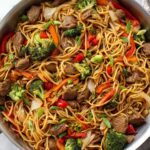
Beef Lo Mein Recipe
- Prep Time: 20 minutes
- Cook Time: 15 minutes
- Total Time: 35 minutes
- Yield: 4 servings
- Category: Main Course
- Method: Stovetop
- Cuisine: Chinese
Description
This Beef Lo Mein recipe features tender strips of sirloin steak stir-fried with crisp vegetables and tossed with classic Lo Mein noodles in a savory, slightly sweet sauce made with beef and chicken broth, soy sauce, garlic, and a touch of spice. Perfect for a quick and flavorful weeknight dinner, it combines a rich depth of flavor with satisfying textures for a comforting Asian-inspired meal.
Ingredients
Sauce
- 1 cup beef broth
- ¾ cup chicken broth
- ¼ cup soy sauce
- 1 tablespoon brown sugar
- 2 tablespoons cornstarch
- 3 cloves garlic, minced
- 1 teaspoon hot sauce
- ¼ teaspoon toasted sesame oil
- ¼ teaspoon ground ginger
- 1 pinch red pepper flakes (optional)
Stir Fry
- 1 lb top sirloin steak
- Salt and pepper, to taste
- ½ teaspoon garlic powder
- ½ teaspoon onion powder
- 2 tablespoons peanut oil, plus more as needed
- ½ cup dry white wine
- 2 cups broccoli, cut into bite-sized pieces
- 1 yellow onion, cut into chunks
- 1 red bell pepper, cut into chunks
- ½ cup carrots, julienned
- 8 oz Lo Mein noodles
- Green onions, to garnish
Instructions
- Prepare the Sauce: Combine all the sauce ingredients in a large measuring cup with a spout. Pour ¼ cup of this mixture into a separate medium bowl and set the rest aside for later use.
- Tenderize and Slice the Beef: Cover the beef with plastic wrap and use a meat tenderizer to pound it on both sides for tenderness. Trim any large fat areas, then slice the beef into 1.5-inch strips against the grain.
- Season and Marinate the Beef: Season the beef with salt, pepper, garlic powder, and onion powder, then toss it in the reserved ¼ cup of sauce. Let it marinate while you prepare the vegetables and start boiling salted water for the noodles.
- Sear the Beef: Heat 2 tablespoons peanut oil in a large skillet over medium-high heat. Add the beef and sear without moving for 2-3 minutes. Toss and cook the other sides for about 2 more minutes. Remove the beef and set aside.
- Deglaze the Skillet: Turn off the heat and pour in the white wine. Turn the heat back on to medium and use a silicone spatula to scrape the bottom and sides of the skillet, loosening browned bits to add flavor. Let the wine reduce by half, about 4 minutes.
- Cook the Noodles: Boil the Lo Mein noodles in salted water for 1 minute less than al dente according to package instructions. Drain and optionally toss with a bit of oil to prevent sticking.
- Sauté the Vegetables: Add the broccoli, onion, red bell pepper, and carrots to the skillet with the reduced wine. Cook for about 3 minutes until the vegetables soften slightly.
- Thicken the Sauce: Pour in the reserved sauce and bring it to a boil to activate the cornstarch, thickening the sauce. Once thick, reduce the heat to low.
- Add Noodles and Toss: Gradually add the cooked noodles to the skillet, tossing to coat them evenly with the sauce until reaching the desired noodle-to-sauce ratio.
- Reheat the Beef: Return the cooked beef and any juices on the plate to the skillet. Toss everything together and heat through for 1-2 minutes.
- Garnish and Serve: Sprinkle sliced green onions over the finished dish and serve immediately for best flavor and texture.
Notes
- Steak Cuts: Strip steak, skirt steak, flank steak, or sirloin are suitable for this recipe.
- White Wine Substitute: Use chicken broth if avoiding alcohol; chardonnay or pinot grigio work best for deglazing.
- Noodle Options: Use regular Lo Mein noodles or substitute 8 oz spaghetti if needed.
- Broth Combination: Using both beef and chicken broth enhances flavor, but all chicken broth can be used if preferred.
- Optional Peanut Flavor: Add a heaping tablespoon of peanut butter to the sauce for a subtle peanut taste.
- Additional Vegetables: Mushrooms, celery, green beans, or edamame can be added for variety.
- Toppings: Garnish with green onions, peanuts, cashews, or crunchy chow mein noodles for extra texture.
- Protein Variations: Try chicken or shrimp Lo Mein recipes for alternatives.
- Storage: Refrigerate leftovers in an airtight container for up to 3 days or freeze for up to 3 months.
- Reheating Tip: Use a timer when cooking noodles initially to avoid overcooking and mushy texture when reheated.
Nutrition
- Serving Size: 1 serving
- Calories: 450 kcal
- Sugar: 6 g
- Sodium: 900 mg
- Fat: 15 g
- Saturated Fat: 4 g
- Unsaturated Fat: 9 g
- Trans Fat: 0 g
- Carbohydrates: 45 g
- Fiber: 4 g
- Protein: 30 g
- Cholesterol: 75 mg




Leave a Reply