
There’s something so satisfying about that sweet-savory balance when you bite into a perfectly cooked salmon. This Baked Salmon with Honey Soy Glaze Recipe really hits the spot with its glossy, sticky finish and tender, flaky fish underneath. It’s one of those dishes I come back to again and again for easy weeknights or when I want to impress without fuss.

Jump to:
Why You'll Love This Recipe
I adore this Baked Salmon with Honey Soy Glaze Recipe because it’s a simple way to transform humble salmon fillets into a dish with bold flavors. Plus, it’s quick to throw together and feels fancy enough for guests without the stress.
- Flavor magic: The honey and soy combo creates this unbeatable glaze that’s sweet, salty, and just a little tangy.
- Effortless cooking: No marinating for hours—just mix, brush, and bake for a perfectly glazed finish every time.
- Customizable: Whether you like your salmon with skin on or off, a little extra garlic, or a touch of heat, this recipe handles it all beautifully.
- Healthy and hearty: Salmon is packed with omega-3s, and the glaze adds flavor without tons of extra calories or fuss.
Ingredients & Why They Work
Each ingredient in the Baked Salmon with Honey Soy Glaze Recipe plays a key role that turns simple salmon into a crowd-pleaser. Here are the staples you'll want and a little about why they shine together:

- Salmon fillets: I recommend skin-on for crispy edges but feel free to use skinless if you prefer.
- Low sodium soy sauce: Balances the sweetness and prevents the glaze from becoming overwhelmingly salty.
- Olive oil: Adds a subtle fruitiness and helps the glaze stick to the salmon.
- Honey: Brings just the right amount of natural sweetness and helps caramelize the glaze.
- Dijon mustard: Adds a tangy depth that cuts through the sweetness for balance.
- Garlic: Fresh minced garlic offers a punch of aromatic warmth that pairs beautifully with the soy.
Make It Your Way
One of the things I love most about this Baked Salmon with Honey Soy Glaze Recipe is how easily it adapts to what you have on hand or your personal preferences. Don’t hesitate to tweak the glaze or try different add-ins to make it truly yours.
- Variation: I sometimes add a pinch of red pepper flakes for a subtle kick – it complements the sweetness perfectly and adds a little smoky warmth that I adore.
- Seasonal twists: In warmer months, I might toss in some thinly sliced green onions or fresh ginger for brightness.
- Dietary swap: For a lower-sodium option, use tamari or coconut aminos instead of soy sauce without losing flavor.
Step-by-Step: How I Make Baked Salmon with Honey Soy Glaze Recipe

Step 1: Bring The Salmon To Room Temperature
Before you do anything else, pull your salmon out of the fridge and let it sit for about 15 minutes. This helps the fish cook evenly throughout, so the outside doesn’t dry out while waiting for the center to finish.
Step 2: Prepare Your Glaze
Whisk together the soy sauce, olive oil, honey, Dijon mustard, and minced garlic in a small bowl. I usually give it a quick taste to balance the sweetness and saltiness before moving on. If it’s too sweet, a splash more soy sauce fixes that nicely.
Step 3: Arrange The Salmon And Add The Glaze
Line your baking dish with parchment or foil for easy cleanup, then place the salmon skin-side down. Reserve half the glaze for later, and brush the other half generously over the fillets. This upfront glazing helps infuse the fish with flavor while it bakes.
Step 4: Bake And Glaze Again
Bake the salmon at 400°F for about 12 minutes, then pull it out to brush on the remaining glaze. Return it to the oven for another 2 to 8 minutes depending on thickness and how you like your salmon cooked. You want it to flake easily with a fork but still be moist and tender inside.
Top Tip
I’ve made this recipe dozens of times, and a few small tricks really make a difference to get that perfect balance of caramelized glaze and tender salmon:
- Pat dry the salmon before glazing: This helps the glaze stick instead of sliding off and ensures better caramelization.
- Don’t overbake: Salmon continues cooking after you take it out of the oven, so check for doneness early and let it rest.
- Use a meat thermometer: To nail your preferred doneness, I aim for 125-130°F internally, then rest for a few minutes before serving.
- Reserve some glaze for finishing: The second brushing before final bake adds that luscious, glossy coating that makes this dish shine.
How to Serve Baked Salmon with Honey Soy Glaze Recipe

Garnishes
I love sprinkling chopped fresh scallions or thinly sliced green onions on top—adds a fresh, grassy bite. Toasted sesame seeds are another favorite for a bit of texture and nuttiness. Sometimes I’ll even toss on some microgreens or a squeeze of fresh lime to brighten it all up.
Side Dishes
This salmon pairs beautifully with simple steamed vegetables like broccoli or green beans. A fluffy jasmine rice or garlic mashed potatoes soak up the extra glaze so well. On occasion, I’ll serve it with a crisp Asian slaw for a refreshing crunch contrast.
Creative Ways to Present
For special dinners, I like plating the salmon atop a bed of soba noodles tossed in sesame oil and soy sauce, then garnish with sliced avocado and pickled ginger. It feels fancy but remains easy and light. You can also serve individual salmon portions on small lettuce leaves with a drizzle of extra glaze for a playful appetizer twist.
Make Ahead and Storage
Storing Leftovers
I usually store leftover salmon in an airtight container in the fridge for up to 2 days. Reheat gently to keep it from drying out.
Freezing
In my experience, salmon can be frozen after cooking, but the glaze texture changes a bit. I prefer freezing fresh fillets and then making the glaze fresh when ready to bake for the best flavor and texture.
Reheating
When reheating, I gently warm the salmon in a low oven (around 275°F) for about 10 minutes, covered loosely with foil. This avoids drying out while freshening up the glaze’s shine. Microwave reheating tends to make it rubbery, so I avoid that when possible.
Frequently Asked Questions:
Yes! Just make sure to thaw the salmon completely in the fridge and pat it dry before applying the glaze to ensure it sticks and cooks evenly.
Check for doneness by gently flaking the thickest part of the fillet with a fork; the flesh should flake easily but still be moist. A meat thermometer inserted into the thickest part should read about 125-130°F for medium, or up to 145°F if you prefer fully cooked.
Absolutely. The glaze keeps well in the refrigerator for up to 2 days in an airtight container. Just whisk it again before brushing onto the salmon.
You can substitute maple syrup or brown sugar for the honey. Both add sweetness and create that lovely caramelized glaze. Just be sure to adjust quantities to your taste.
Final Thoughts
This Baked Salmon with Honey Soy Glaze Recipe holds a special place in my kitchen because it’s so reliably delicious and straightforward. Whether you’re making a quick dinner or entertaining, it’s a winner that feels special without any drama. I hope you enjoy making (and eating!) it as much as I do—there’s something so joyful about sharing that perfect glaze-coated bite with family or friends. Give it a try soon and let me know what twists you come up with!
Print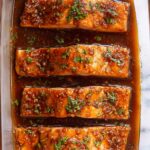
Baked Salmon with Honey Soy Glaze Recipe
- Prep Time: 10 minutes
- Cook Time: 20 minutes
- Total Time: 30 minutes
- Yield: 4 servings
- Category: Main Course
- Method: Baking
- Cuisine: American
- Diet: Low Salt
Description
A simple and flavorful baked salmon recipe featuring a delicious honey soy glaze with garlic and Dijon mustard. Perfectly cooked in the oven to retain moisture and enhance natural salmon flavors.
Ingredients
Salmon and Glaze
- 4 salmon fillets, 6 ounces each, skin on
- 1 ½ tablespoons low sodium soy sauce
- 1 tablespoon olive oil
- 1 tablespoon honey
- 1 ½ teaspoons Dijon mustard
- 2 cloves garlic, minced
Instructions
- Bring Salmon to Room Temperature: Remove the salmon from the refrigerator and let it sit at room temperature while preparing the glaze to ensure even cooking.
- Preheat Oven and Prepare Dish: Preheat your oven to 400 degrees Fahrenheit. Line a 9×13-inch baking dish with parchment paper or foil for easy cleanup.
- Prepare the Glaze: In a small bowl, whisk together the low sodium soy sauce, olive oil, honey, Dijon mustard, and minced garlic until smooth and well combined.
- Apply Glaze to Salmon: Place salmon fillets skin side down in the baking dish. Reserve half of the glaze in a separate dish. Brush or spoon the remaining half evenly over the salmon fillets.
- Bake the Salmon: Bake the salmon at 400°F for 12 minutes, then remove from the oven and brush on the reserved glaze.
- Finish Baking: Return the salmon to the oven and bake for an additional 8 minutes, or until cooked through to your liking. The salmon should flake easily with a fork. Thicker fillets may require extra cooking time.
- Serve and Rest: Optionally let the salmon rest for 3 minutes after baking to enhance juiciness before serving.
Notes
- You can substitute the honey soy glaze with a dry rub seasoning for a different flavor profile. Just rub the seasoning over the salmon before baking.
- Cooking times may vary depending on fillet thickness; always check for doneness by flaking with a fork or using a thermometer.
- Using parchment paper or foil helps with easy cleanup.
- For a lower sodium option, use reduced sodium soy sauce or tamari.
Nutrition
- Serving Size: 1 fillet (6 ounces)
- Calories: 280 kcal
- Sugar: 5 g
- Sodium: 350 mg
- Fat: 15 g
- Saturated Fat: 2.5 g
- Unsaturated Fat: 11 g
- Trans Fat: 0 g
- Carbohydrates: 7 g
- Fiber: 0.5 g
- Protein: 32 g
- Cholesterol: 70 mg





Leave a Reply